
|
TL;DR Intercom systems in Australia range from simple audio buzzers to full IP video door stations integrated with CCTV and access control. For homes and small businesses, a standalone IP video intercom with two-way audio and mobile app access covers most needs. For apartments, commercial buildings, and multi-entry sites, you need a system designed for multi-unit use with proper indoor station or app-based answering. This guide explains every option and which one suits your situation. |
Parcel theft is at levels Australians have not seen before. Opportunistic callers who case properties before breaking in are a documented pattern in police reports across Sydney, Melbourne, and Brisbane. An intercom system is no longer a premium addition to an entry; it is a practical layer of protection that costs less than most people expect.
But 'intercom system' covers a huge range of products, from a $150 battery-powered video doorbell to a $3,000 professionally installed IP video intercom integrated with access control and CCTV recording. This guide explains the differences and helps you match the right system to your actual situation.
Types of Intercom Systems
Audio-Only Intercoms
Audio-only intercoms provide two-way voice communication between a door station and an indoor unit (or multiple indoor units). They are common in older apartment buildings and commercial properties where visual identification is not required. They are being rapidly replaced by video intercoms in new installations, but audio-only remains relevant for internal communication in commercial premises (factory floor to reception, for example).
Video Intercoms (IP-Based)
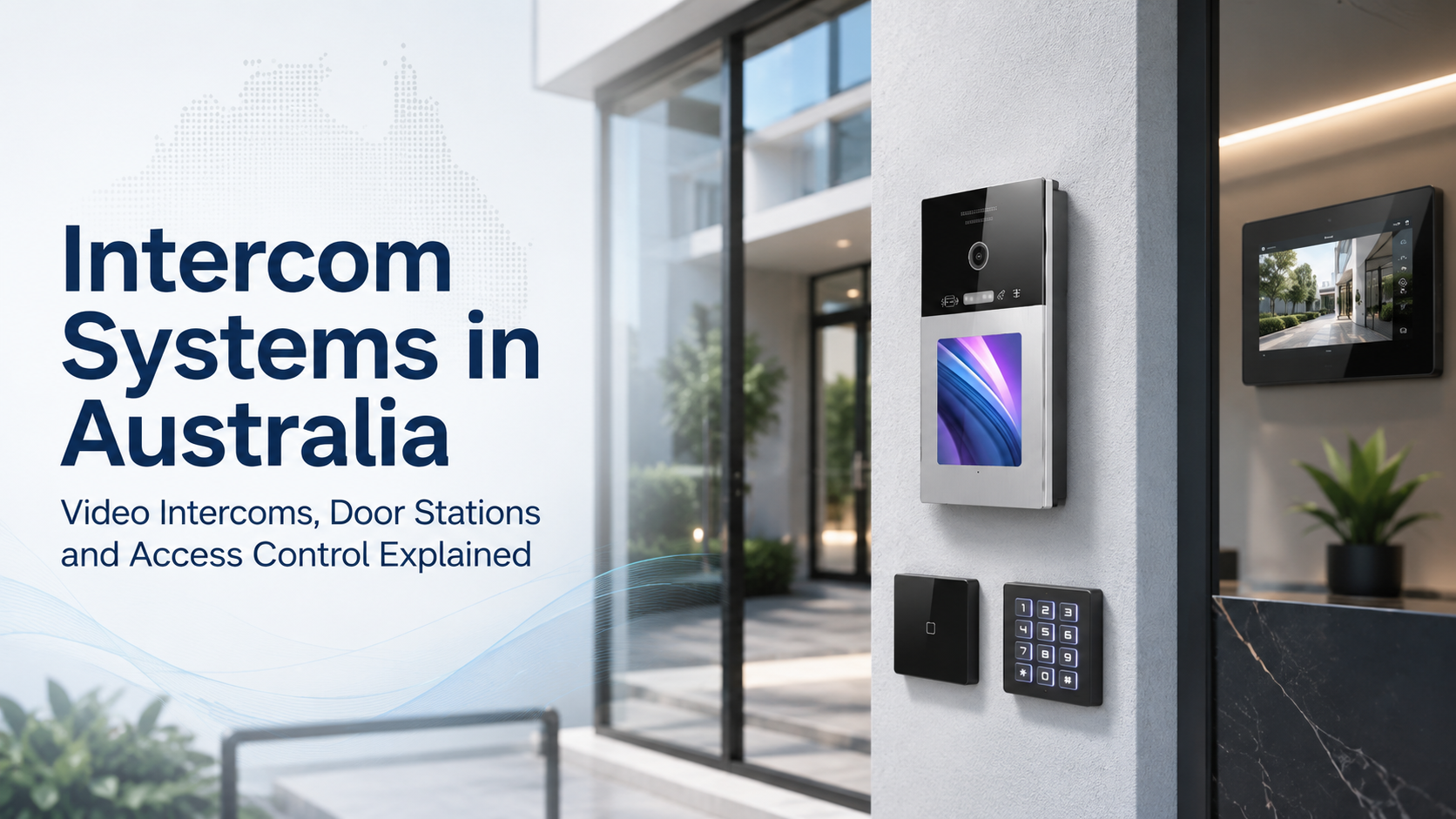
A video intercom adds a camera at the door station that streams live to an indoor monitor or smartphone. Modern IP video intercoms from Hikvision, Dahua, and Akuvox operate over the same Ethernet network as IP cameras, allowing footage from door events to be recorded on a compatible NVR alongside other security cameras.
The quality difference between a basic video doorbell and an IP video door station is significant. Door stations use proper lens optics, weatherproof housings rated for outdoor installation, and fixed mounting that cannot be redirected or removed by a visitor. For permanent residential and commercial use, an IP door station is the better investment.
SIP-Based Intercoms
SIP (Session Initiation Protocol) intercoms use standard internet telephony protocols to make calls from the door station to a SIP-capable phone, tablet, or PABX system. They are common in commercial buildings, apartments with existing PABX infrastructure, and any setting where the intercom call needs to route to multiple endpoints (the reception desk, a mobile phone, and an office phone simultaneously).
Akuvox is a leading SIP intercom brand supported in Australia. Their door stations are compatible with many existing apartment intercom systems, making them useful for building upgrades without a complete infrastructure replacement.
House vs Apartment vs Commercial: The Setup Differences
Single-Family Homes
For a freestanding home, a standalone IP video door station with a compatible indoor monitor (or app-based answering on a smartphone) is the most practical setup. Products like the Hikvision DS-KV6113-WPE1 door station with a DS-KH6320-WTE1 indoor monitor are a popular Australian residential combination.
The key feature to look for in a residential setup is mobile app compatibility. Being able to see and answer the front door from anywhere in the house, or from your phone when you are not home, changes how you interact with deliveries and visitors. Many Hikvision and Dahua door stations connect to their respective apps (Hik-Connect and DMSS) without requiring a subscription.
Apartments and Multi-Unit Buildings
Apartment intercom systems need to handle multiple units from a single entry point. Each apartment needs its own indoor station or app-based connection. The door station needs to support a unit directory so visitors can call specific apartments without having access to all of them.
This is significantly more complex than a single-home setup. The infrastructure requirements vary depending on whether the building uses an older analogue intercom bus, a modern IP network, or SIP telephony. For apartments considering an upgrade, engaging a specialist installer who can assess the existing infrastructure is strongly recommended before purchasing hardware.
Commercial Properties
Commercial intercom requirements vary widely. A small retail shop may simply need a door buzzer with a remote release so staff can admit approved visitors without leaving the counter. A larger office may need a full video intercom with access control integration, so the door station both identifies visitors and logs entry events.
For commercial properties with controlled access requirements, door stations integrated with card reader or PIN entry modules provide a complete access management solution in a single piece of hardware.
Access Control Integration
Modern IP video door stations from Hikvision and Dahua can be configured as full access control entry points, combining video intercom, card reader (Mifare, EM, or mobile credential), PIN code entry, and remote door release in a single unit.
When integrated with an access control platform, every entry event is logged with a timestamp and associated video clip. Administrators can review entry histories, revoke access credentials remotely, and receive alerts for forced door events or doors held open longer than expected.
For businesses managing staff access to secure areas, or for residential complexes managing contractor and visitor access, this integration eliminates the need for a separate access control reader alongside the intercom, reducing hardware cost and simplifying the installation.
Integration with CCTV and NVR Systems
The most significant capability difference between consumer doorbell cameras and professional IP door stations is NVR integration. A professional door station configured as an IP camera on a compatible NVR records every door event to the same storage and management system as your other security cameras.
This means when you review footage after an incident, door station footage is searchable alongside all other cameras in the same interface. You can review who rang the bell at 11pm on a specific date as easily as reviewing a driveway camera clip.
Hikvision door stations integrate directly into Hikvision NVRs. Dahua door stations work with Dahua NVRs. Both platforms support ONVIF for cross-brand compatibility where needed.
Key Specifications to Compare
|
Specification |
What to Look For |
Why It Matters |
|
Camera resolution |
2MP minimum, preferably 2MP at wide angle |
Clear face images at typical door distances |
|
Night vision |
IR or supplemental white light |
Visitors arriving after dark |
|
Weatherproofing |
IP65 minimum, IP66 for exposed positions |
Australian weather, particularly coastal areas |
|
Audio quality |
Built-in noise cancellation |
Clear conversation over ambient noise |
|
Door release |
Dry contact relay output |
Compatible with most electric strikes and magnetic locks |
|
Mobile app |
iOS and Android, no mandatory subscription |
Remote answering when away from home |
|
NVR integration |
ONVIF or native brand compatibility |
Recording door events with your security camera footage |
Top Brands Available in Australia
Hikvision offers one of the most complete intercom ecosystems available in Australia. Their DS-KV series door stations cover residential single-family homes through to commercial multi-entry applications, and they integrate natively with the Hikvision NVR range.
Dahua's DHI-VTO series door stations are a strong alternative, particularly for installers already running Dahua camera systems. The integration between door stations and Dahua NVRs is seamless and well-documented.
Akuvox specialises in SIP-based video intercoms and is the preferred brand for apartment building upgrades and commercial SIP-compatible installations. Their E12 and R29 series are widely specified by Australian apartment building managers.
Aiphone is a Japanese brand with a strong Australian presence in the commercial and healthcare sectors. Their JF and JO series are known for reliability and simple installation in multi-unit residential and light commercial applications.
Shop Intercom Systems
Explore intercom systems for homes, apartments, offices, and commercial properties, including video intercoms, door stations, indoor monitors, and access control options.
Frequently Asked Questions
Can I use a video intercom as my front door camera?
Yes, if it is configured to record to an NVR. A standalone video doorbell that only streams to an app without recording is useful for live answering but does not provide historical footage for review. An IP door station connected to a compatible NVR records all motion events and door activations for later review, functioning as a proper security camera at the entry point.
Do intercom systems work with existing electric strikes and magnetic locks?
Most IP door stations include a dry contact relay output that is compatible with standard electric strikes (12V or 24V) and magnetic locks. The relay can also be configured to trigger from the indoor monitor, the mobile app, or access control credentials. Check the door station's voltage compatibility with your lock before purchasing.
What is the difference between a door station and a doorbell camera?
A door station is a permanently mounted commercial or residential intercom device with a fixed camera, weatherproof housing, and typically a door release output. A doorbell camera is a consumer product that replaces a standard doorbell, usually battery-powered or wired to an existing doorbell circuit, and connects to a cloud service via WiFi. Door stations offer better build quality, NVR integration, and reliability. Doorbell cameras offer easier DIY installation.
Can the intercom system work if my internet is down?
A local IP network intercom (door station communicating with an indoor monitor on the same LAN) continues to work without internet because calls route locally. Mobile app functionality requires internet. For properties where internet reliability is a concern, having a dedicated indoor monitor as the primary answering device rather than relying solely on the phone app is a sensible backup.
Conclusion
Intercom systems bridge the gap between knowing someone is at your door and knowing who they are and whether to let them in. For homes, a simple IP video door station with mobile app access covers the essential use case. For apartments and commercial properties, the integration requirements are more involved but the value of a properly specified system is proportionally greater.
The combination of video verification, access control, and NVR recording in a single door station makes modern IP intercoms a genuinely different product to the audio buzzers many Australians remember from older installations.
Browse IP video intercom systems and door stations at CCTV Importers, including Hikvision, Dahua, and Akuvox products with Australian support and genuine stock.


