
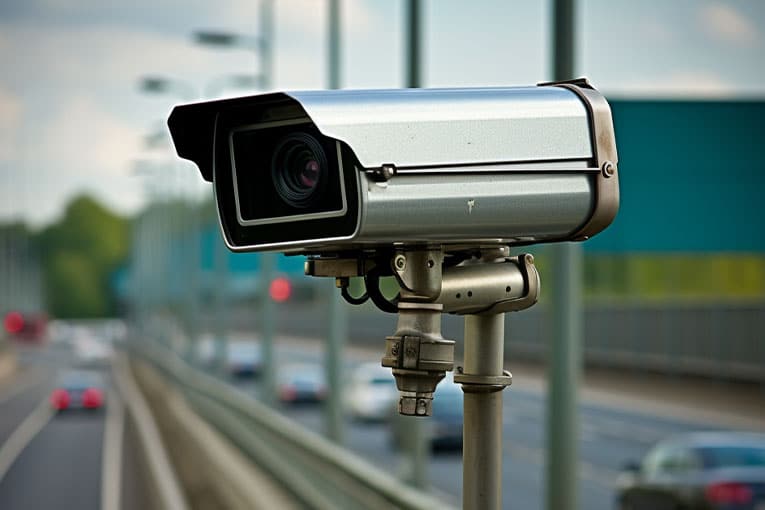
It happens after almost every driveway break-in. Someone pulls the footage, sees the car clearly, then zooms in on the number plate and gets a white smear. "But it's a 4K camera," they say. It is. It just isn't the right kind of camera for plates.
So, can home CCTV cameras capture number plates? Sometimes, on a parked car in daylight. Reliably, on a moving car at night? No. For that you need a dedicated ANPR (Automatic Number Plate Recognition) camera, mounted in the right spot. This guide explains why, and exactly how to set one up at an Australian home or business.
TL;DR
- Wide overview cameras cannot reliably read plates, whatever their resolution.
- The problem is motion blur, IR glare off reflective plates, and the wrong angle, not megapixels.
- A dedicated ANPR camera (2MP or 4MP is plenty) mounted 0.5 to 2 metres high, within 15 to 20 degrees of head-on, 3 to 8 metres from where cars slow down, will read plates day and night.
- Keep your normal cameras for overview and faces. Add one ANPR camera at the entry point.
Why normal CCTV cameras struggle with number plates
1. Motion blur
Security cameras are tuned for people walking around. A car moving at even 20 km/h needs a much faster shutter speed to freeze the plate. At normal settings, the characters smear.
2. Infrared glare at night
Australian plates are retro-reflective. Point an IR camera at one and the plate bounces the infrared straight back into the lens, turning it into a glowing white rectangle.
3. Too wide a view
A 2.8mm or 4mm overview camera spreads its pixels across the whole driveway and street. The plate ends up being a few dozen pixels wide. Resolution helps a little; field of view matters far more.
4. Wrong height and angle
Cameras under the eaves look steeply down and across. Plates are read best almost straight on. Past about 20 degrees off-axis, characters distort and recognition falls away.
5. Headlights and changing light
Headlights at night and harsh afternoon sun both blow out the area around the plate on a general camera.
Can CCTV cameras record number plates at night?
Standard security cameras generally cannot reliably capture readable plates at night, even at 4K, because a moving vehicle needs a fast shutter to avoid blur, and normal IR cannot supply enough targeted light at that shutter speed. Dedicated ANPR cameras pair a fixed fast shutter with targeted IR or white light and plate-specific exposure, so the plate stays readable while the rest of the scene goes dark.
| Factor | Standard 4K security camera | Dedicated ANPR camera |
|---|---|---|
| Stationary vehicle, daylight | Usually readable | Readable |
| Moving vehicle, night | Rarely readable | Readable (its specific purpose) |
| Plate logging and search | No | Yes, with timestamps and lists |
| Cost | Lower | Higher, specialised hardware |
In daylight, plate capture on standard cameras works more often because there is enough light for a fast shutter without help. Night is where the gap shows.
How to set up an ANPR camera: height, angle and distance
Placement decides whether an ANPR camera works. These are the rules we give installers:
| Setting | Recommended | Why |
|---|---|---|
| Mounting height | 0.5 to 2 metres | Keeps the view close to plate level, avoiding distortion |
| Horizontal angle | Within 15 to 20 degrees of head-on | Characters stay square and readable |
| Distance | 3 to 8 metres from where the vehicle slows | Plate fills enough of the frame |
| Capture point | Gate, boom, driveway entry or speed hump | Slower vehicles mean sharper plates |
| Resolution | 2MP or 4MP ANPR model | A narrow, zoomed view matters more than megapixels |
A bollard or short post beside the driveway, a gate pillar or a low wall at the entry are all good mounting points. Use the motorised zoom to frame a space roughly one to two car-widths across at the capture point, then set the shutter and exposure for plates in the camera's ANPR mode.
Two-storey home? Do not use an upper-eave camera for plates. Our double-storey CCTV guide explains how ANPR fits alongside your overview cameras.
What to look for in an ANPR camera
- Dedicated ANPR or LPR mode with plate detection, not just "high resolution".
- Motorised varifocal zoom so you can frame the capture point precisely after mounting.
- Fast fixed shutter and plate exposure control to freeze moving vehicles.
- Night illumination designed for plates, either targeted IR or full-colour white light.
- Plate lists and search on the NVR, so you can log visitors or flag unknown vehicles.
- IP67 and IK10 because it is mounted low and within reach.
For a business or rural gate, the TP-Link VIGI InSight LPR345Z is a good example: 4MP, 5x motorised zoom, full-colour night vision, IP67 and IK10, and barrier gate control. Compare other models in our ANPR camera range.
Do you actually need ANPR at home?
For most suburban homes, no. Good 6MP or 8MP overview cameras will catch the car, the colour, the make and the people getting out, which is usually enough for police to work with. ANPR is worth adding if you:
- have a long rural or acreage driveway with repeat trespass or theft
- run a business with a car park, gate or loading dock
- manage strata parking or a body corporate entry
- want a log of every vehicle entering, not just footage
For overview coverage that handles colour at night, a colour night vision kit such as the HiLook Pro Hi-Color 6MP kit outperforms basic IR. Pair it with one ANPR camera at the entry and you have both evidence and plates.
Capture plates the right way
Dedicated ANPR and LPR cameras with motorised zoom, plate-tuned shutters and night illumination. Genuine AU stock with local warranty.
Frequently asked questions
Can a 4K security camera read number plates?
Only sometimes, usually on a parked car in daylight. On moving cars, and especially at night, a 4K overview camera rarely produces a readable plate because of motion blur, IR glare and a too-wide view.
How high should an ANPR camera be mounted?
Between 0.5 and 2 metres, within 15 to 20 degrees of head-on to the vehicle, and about 3 to 8 metres from where the car slows down.
Do ANPR cameras work at night?
Yes. They use a fast fixed shutter with illumination and exposure tuned for reflective plates, so the plate stays readable when the rest of the scene is dark.
Can I adjust my existing camera to read plates?
Increasing shutter speed and narrowing the view helps a little, but a general camera on the eaves is still at the wrong height and angle. A dedicated ANPR camera at the entry point is far more reliable.
Is it legal to record number plates in Australia?
Generally yes on your own property, as long as you are not recording into private areas of neighbouring properties. Businesses should check their state's surveillance laws and privacy obligations, and use clear signage.
Number plates are a placement problem, not a megapixel problem. Keep your overview cameras for the big picture and faces, and add one properly mounted ANPR camera where vehicles slow down. Need help choosing? Talk to our team.


