
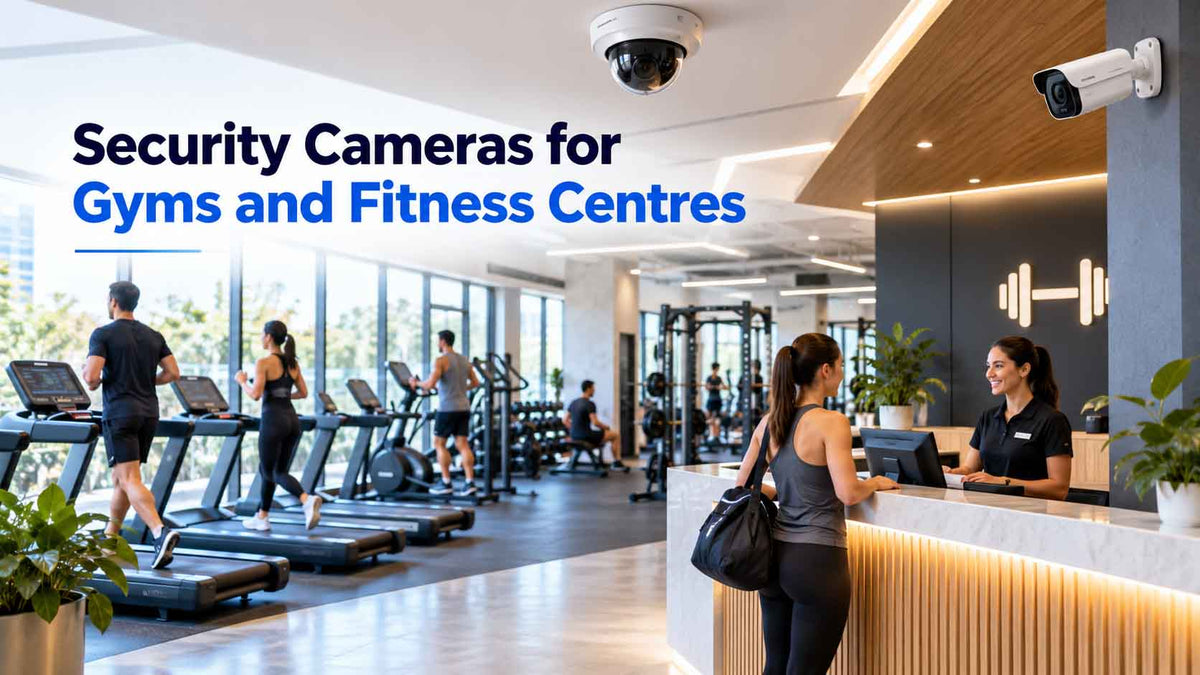
Gym owners tend to think about security as theft. The bigger cost is usually liability: a member injured on equipment, a locker dispute, or an after-hours access issue at a 24-hour facility. Then there is the problem most 24/7 gym owners know all too well: tailgating, where one paying member swipes in and two or three friends follow them through the door.
A good camera setup covers all three. It shows what happened on the gym floor, who went near a locker, and who actually came through the front door compared with who swiped. This guide covers where to put gym security cameras, how to use them to stop tailgating, and the privacy lines you cannot cross.
|
TL;DR: Cover entry/reception, the main gym floor and free weights area, and locker room entries (never inside). Twenty-four-hour gyms need an entry camera tied to swipe logs, and face recognition cameras at the entrance are ideal for catching tailgating. Keep footage for at least two to three weeks, with 30 days recommended, since injury claims often surface weeks later. |
Where to Put Security Cameras in a Gym
Reception and entry. For staffed gyms, resolves transaction disputes. For 24-hour gyms, the entry camera matched against swipe logs is the single most useful feature in the building. Mount it inside the door, facing people as they walk in, so you capture faces rather than backs of heads.
Main gym floor and free weights. Equipment injury claims are one of the most common liability disputes in fitness. Free weights and the squat rack deserve dedicated coverage, not just the edge of a wide gym-floor shot. Mirrors are the hidden problem here. A camera pointed at a mirror wall picks up reflections and glare, so angle cameras along mirror walls, not directly at them.
Cardio area. Treadmill falls are common and often involve a member claiming the machine malfunctioned. A camera covering the cardio row helps you see what actually happened.
Locker room entries. Stop at the door, never inside. Most locker theft disputes resolve from footage of who entered or left at an unusual time.
Group fitness studio. Lower priority, but useful for equipment damage and after-hours misuse of the space.
Car park. After-hours members' cars sit unattended in often-quiet car parks, especially at industrial estate gyms in Perth, Brisbane and outer Sydney suburbs.
Stopping Tailgating at the Front Door
Tailgating is when a non-member slips in behind a paying member, or when one member swipes and lets friends in. At a staffed gym, reception catches most of it. At a 24/7 site running unstaffed overnight, it can quietly cost thousands in lost memberships each year, and it creates a safety problem, since you have no record of who is actually in the building.
Cameras at the entrance can be used to monitor tailgating directly. There are two common approaches:
-
Entry camera plus swipe log review. The camera records everyone who enters, and staff compare footage against access control logs when numbers look wrong. It works, but it is manual.
-
Face recognition cameras at the entrance. This is the ideal option for tailgating. The camera compares each face coming through the door against enrolled members and flags anyone it does not recognise, or flags when more people enter than the number of swipes recorded. Staff get an alert rather than having to trawl through footage.
Face recognition does come with responsibilities. Facial images used to identify people are biometric information, which counts as sensitive information under Australian privacy law and generally requires consent. If you go down this path, build consent into your membership terms, tell members clearly at sign-up and with signage at the door, only enrol members who agree, and keep a card or app alternative. The OAIC has been paying close attention to facial recognition use by businesses, so get the paperwork right from day one.
Browse facial recognition cameras and scanners for entry points, including face recognition NVRs that can run the matching for you.
Privacy Rules You Cannot Break
Change rooms, showers and toilets must never have cameras, regardless of intent. State surveillance device laws treat this as a clear breach, and Victoria's legislation specifically prohibits surveillance in workplace toilets, washrooms and change rooms. Coverage at the entry door is standard, legal, and does the actual job.
Also keep in mind:
-
Put CCTV signage at the entrance and on the gym floor.
-
Mention CCTV (and face recognition, if used) in membership terms.
-
Give staff written notice of workplace surveillance, especially in NSW and the ACT.
-
Limit who can access footage to the owner and senior managers.
Recommended Setup
A small-to-mid gym floor plus entry typically needs 4 cameras. The HiLook 6MP AI CCTV Security Kit (up to 4 cameras) covers gym floor, free weights and entry at a cost-effective entry-level price point, with IP67-rated cameras and 2TB included. For 24-hour access sites, pair it with a stainless steel illuminated exit switch plate at the entry door so swipe/exit events line up cleanly against camera footage.
Larger clubs with multiple zones usually move to 8 or 16 cameras. At that size, consider an 8MP camera at the entrance, and a face recognition capable recorder from the NVR range if tailgating is a real problem. If you are adding or upgrading door hardware at the same time, the electric locking range covers maglocks, strikes and exit buttons for access-controlled doors.
Small Studio vs 24/7 Gym
|
Factor |
Staffed studio |
24/7 unstaffed gym |
|---|---|---|
|
Camera count |
4 to 6 |
8 to 16 |
|
Entry camera priority |
High |
Critical |
|
Tailgating control |
Reception staff |
Face recognition or swipe-log matching |
|
Retention |
2 to 3 weeks minimum |
30 days recommended |
|
Remote viewing |
Useful |
Essential |
FAQ
Can we put cameras in change rooms?
No, ever. Stop coverage at the entry door.
Where does most gym theft happen?
Locker areas and car parks, not the gym floor.
Do 24-hour gyms need more cameras?
Not necessarily more, but the entry camera and swipe-log integration matter more, since no staff are on-site overnight.
How do gyms stop tailgating?
Cameras at the entrance can monitor tailgating by comparing who walks in against swipe records. Face recognition cameras are ideal because they flag unrecognised faces automatically, though they require member consent and clear notice.
How long should a gym keep footage?
At least two to three weeks, and 30 days is recommended, because injury claims often arrive well after the incident.
Protect Your Members and Your Business
Browse security camera systems for gym floor and entry coverage, and facial recognition cameras if tailgating at your 24/7 site is costing you memberships.


