
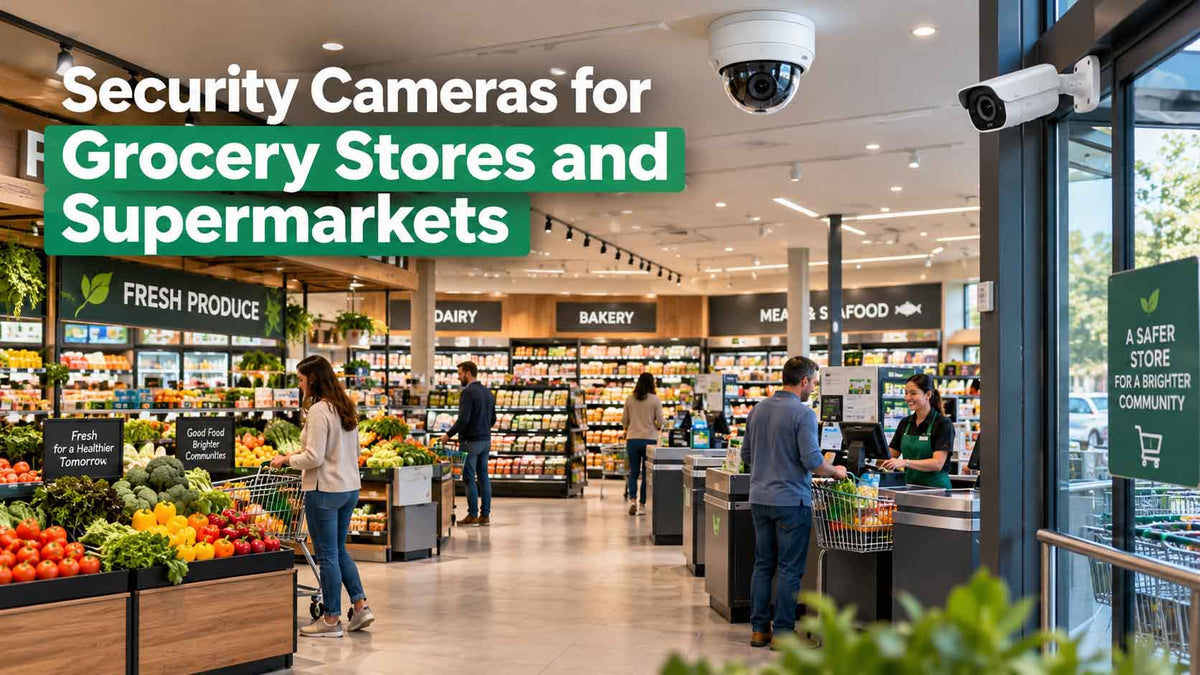
Grocery retail loses stock differently. Rarely one big theft, more a constant low-level drain: self-checkout scanning avoidance, staff discount misuse, receiving dock discrepancies, and organised theft of small high-value items like meat, alcohol and baby formula.
For an independent IGA, Foodworks or an Asian grocer in Box Hill, those small losses add up fast on thin grocery margins. Every $1 of stolen stock needs many dollars of sales to replace it. That is why grocery CCTV has to be planned around where shrinkage really happens, not just where the front door is.
|
TL;DR: Cover self-checkout lanes, the receiving dock, high-theft aisles (alcohol, meat, formula, health and beauty), and the staff exit, with retention long enough to cross-reference against stocktake cycles. Self-checkout scanning avoidance is one of the fastest-growing shrinkage categories in Australian grocery retail. Most independent supermarkets need 12 to 24 cameras on a PoE network with 30 days of storage. |
The Positions That Matter in a Grocery Store
Self-checkout lanes. The highest-priority position in a modern grocery store. Overhead cameras capturing both the scan motion and bagging area let staff or AI-assisted review flag discrepancies without watching every transaction live.
Staffed checkouts. Sweethearting, where a cashier lets friends or family through without scanning items, is a known grocery problem. A camera over each register captures the belt, scanner and drawer.
Receiving dock and stockroom. Discrepancies between delivery manifests and what actually gets logged into stock are a genuine, under-monitored loss category. Cover the dock door and the checking area.
High-theft aisles. Alcohol, meat, health and beauty, and infant formula consistently rank as the most targeted categories in Australian retail theft data.
Staff exit and break areas. Internal theft is a meaningful share of grocery shrinkage; a staff exit camera resolves disputes fairly and protects honest staff too.
Trolley bay and car park. Trolley theft and vehicle break-ins are common enough that most major chains run dedicated car park camera systems.
Self-Checkout Needs Its Own Plan
Self-checkout deserves its own callout because it has changed grocery theft's shape more than anything else. Coverage needs to capture the scan point and bagging area from an angle that lets a reviewer confirm whether an item was actually scanned, not just a general overview.
A few installer tips:
-
Mount one camera directly above each terminal, or one between each pair, looking straight down on the scanner and bag well.
-
Add one wider camera behind the bank of terminals to capture faces as people leave.
-
Avoid pointing cameras up at bright ceiling lights, which flattens the image.
Some supermarkets pair this with AI weight-mismatch alerts, but footage remains the evidence that resolves the dispute.
Building the Network for a Larger Store
Once you pass about 12 cameras, the network matters as much as the cameras. Most supermarkets run cameras on a dedicated PoE switch rather than relying on the NVR's built-in ports, which lets you run longer cable paths, add cameras later, and keep CCTV traffic off the store's POS network. Size the switch's PoE power budget with some headroom, since cameras with IR and heaters draw more at night and in winter.
For the recorder, a 16 or 32-channel unit with two or more hard drive bays gives you the storage headroom a grocery store needs. The Hikvision NVR range includes models with smart search features that make reviewing a specific aisle or checkout over a week much faster.
Common Mistakes in Grocery CCTV
-
Overview cameras everywhere, detail nowhere. Wide shots of the whole floor look impressive on a monitor but rarely identify anyone. Mix overview cameras with close positions at checkouts and high-theft shelves.
-
Ignoring the dock after hours. Many losses happen during early-morning deliveries before most staff arrive.
-
Retention shorter than the stocktake cycle. If footage is gone before the count comes back short, the cameras cannot help.
-
No one reviewing footage. Set a weekly routine to spot-check self-checkout and dock footage, even for 15 minutes.
Coverage Plan by Store Size
|
Store type |
Typical cameras |
Key extras |
|---|---|---|
|
Convenience / small grocer |
6 to 10 |
Till, entry, alcohol and tobacco area |
|
Independent supermarket |
12 to 24 |
Self-checkout bank, dock, staff exit, car park |
|
Large format supermarket |
32+ |
Multiple NVRs, dedicated monitoring room |
FAQ
What is the single highest-priority camera today?
Self-checkout coverage.
Do we need cameras on the receiving dock too?
Yes, delivery-manifest discrepancies are a real and often overlooked loss category.
How long should a supermarket keep footage?
Enough to cross-reference against your stocktake cycle. Two to three weeks is the minimum, and 30 days suits stores on a 2 to 4 week cycle.
Can AI cameras detect self-checkout theft?
Some AI systems flag unusual scanning behaviour or weight mismatches, but a clear overhead camera is still what provides the evidence.
Should cameras cover staff areas?
Staff exits and stockrooms, yes, with written notice to staff. Never in toilets, change rooms or staff showers.
Stop Shrinkage Before Stocktake
Browse security camera systems for checkout and aisle coverage, PoE switches for larger store networks, and Hikvision NVRs sized for multi-camera grocery storage volume.


